Showing posts with label Sydney coastal walks. Show all posts

Thursday, 23 May 2013

Manly walk a coastal bushwalk through a Sydney National Park


Walking  Manly from the Wharf through Sydney Harbour National park

On this walk you will see grand views of the ocean harbour and the city skylines from the northern beaches. Along the way browses the free aboriginal art galleries and spend time admiring the unique sculptures along the path to shelly beach the Sculptures in the rocks. This walk starts at the busy suburban Manly enjoy a stroll through the pedestrian mall until you reach the famous Manly beach then walk along the ocean seaside to Shelly beach then a slow climb across a huge coastal cliff that leads to the heart of the Sydney Harbour national park up to North Head. From North Head, we travel back down into two very small hidden beaches along the coastline of Manly until we reach Manly wharf back at our starting destination.
 

Manly

Manly is located at the northern boundary of Sydney Harbour and bordered by the Pacific Ocean. In 1788, Captain Phillip named it Manly Cove because he was impressed with the manly appearance of the aboriginals he discovered on the beach. The increase popularity of Manly as a beach side Suburb increased after the commencement of a regular ferry service in 1854. Manly has always attracted visitors due to the surfing beaches the national park areas and of course the many scenic attractions.
Ferry Wharf at Manly
Manly Wharf
 

Starting our walk From Manly Wharf

Starting and standing in front of the ferry wharf we cross the road at the set of lights to walk along the pedestrian Mall that leads to Manly beach. Past the council building, and past a war memorial dedicated to those soldiers from Manly who served in the armed forces during the Great War.
Building Council

  Free Aboriginal Art Galleries

On both sides of the pedestrian Mall, there are two little aboriginal art galleries. If you have time to browse, why not stop and view the art collection on display.


Art Gallery Manly Aboriginal dream time art Gallery

 
Manly beach
When we reach Manly beach we turn right and walk along the esplanade to meet the fence and pathway to Shelly beach. In 1877, Manly council formed a beautification committee on their recommendations planting of Norfolk Island pines Moreton Bay fig trees throughout the city of Manly begun. Gilbert Smith started the planting of the pines and there were over 500 hundred trees planted growing and thriving until the 1960s when they started to die due to environmental problems. In 1991, 85 more trees were planted to keep up the beatification project along the oceanfront. 
Volley ball on the beach
 Volley ball has become a favourite sport and past time
for many Sydney siders.  
Manly Beach the esplanade

Volley ball on Manly Beach

The waves at Manly

In summer, the waves at Manly beach considered to be among some of the finest waves in the world. International surfing Competitions are an annual part of the surfing scene during summer and attract surfers from all over the globe.

 
Shelly Beach Walkway
 

  Walk to Shelly Beach

It is a very pleasant walk from Manly beach to shelly beach. Along the path, we pass a small swimming pool with an artistic sculpture the shell and the wave sculpture a tribute to the Manly lifesavers from three Manly beaches that carried out 41000 surf rescues up to and before 1988. 

  Sculptures in the rocks

the Sculptures in the rocks Shelly Beach Walkway
In addition, just before we reach shelly beach we stroll along looking and admiring the sculptures in the rocks artistic sculptures embedded in the wall of stone featuring works that encompasses the local wildlife fauna and activities enjoyed in this little cove. The works of arts include Weedy sea dragon, gloomy octopus, surfing the bower break, long noise Bandicoot.

 Boats on the water at Shelly Beach Shelly beach

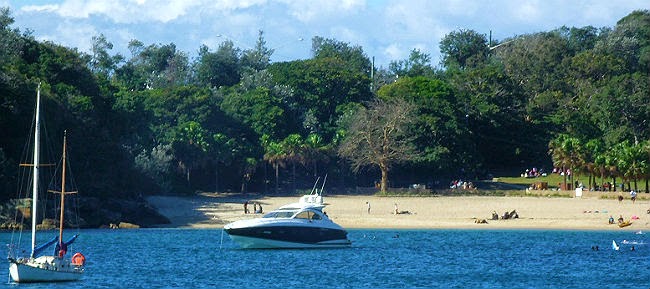
Shelly beach situated below a headland that encloses this delightful little bay with its grassy park towards the back and two little stylish café to the side of the water's edge. People, come here to use the barbeques have a picnic swim and lap up the sun on the beautiful yellow sand.
Scenic view Manly Beach


View from Shelly Beach


We walk to the far side of shelly beach and up the stone stairs until we reach a viewing point on top of the headland overlooking Manly beach the first of many magnificent panoramas of this beach we will see before we reach North Head.
     

After we have finished admiring the view, we turn and start hiking along the path through the entangled coastal shrub until we reach the car park above shelly beach along this small stretch of road we can view the Pacific Ocean never-ending deep blue all the way to the horizon. Holding back the Pacific Ocean is a massive sandstone cliff we take time out to look and watch the waves smashing and pounding the rocks below. Be for we start our next part of the journey.

Sandstone cliffShelly beach Headland Bush walking track

The
path
way
leading to the sandstone cliff


Need to take care

This next part of the journey can become very difficult for young children and inexperienced walkers. As the path, winds upwards through some large sandstone rocks and more twisted tangled coastline scrub.
Walking track on the Headland
 

At the Top of Shelly beach Headland

walking track Coastal views from the HeadlandAs we reach the top of the Headland, we are able to see many panoramas of the Manly coast and surrounding waters.
 Man made sandstone wall Quarantine stationWe keep walking along the sanded pathway until we meet the hole in the wall an impressive man-made sandstone wall built-in 1930s to separate Quarantine station from public open space. We walk through the hole in the wall crossing a plateau with stunning views of the northern beaches. It is 800 meters from the hole in the wall until we reach Blue Fish visitor centre. Road along the way there is sign posted tracks leading into the bush indicating the existence of disused gun pits. Not long after the signs to the gun pits, we arrive at Blue Fish Road and the entry point into North Head sanctuary. We cross the road collect a visitor's guide, from the sign on the road and start walking along a steel mesh track to the grassy lawns of the former Artillery school, and follow the signs to the gatehouse .
 
 One of the Old Gun Pits
Old Gun Pits on the walking track

Gunners Walk

With our map from the visitor centre we follow the clearly sign posted gunners walk a walk that takes you through the former school of the artillery building other things to see include diverse flora and fauna military remnants and city harbour ocean views. Unfortunately, we do not have time to do the whole of gunners walk today to complete the entire walk takes up to two hours instead we are going to head to the Third Quarantine cemetery and back again.
North Head art Gallery painting and Scupture
North Head art Gallery Scupture


The Art Gallery

Our first stop is the art gallery open
free for public viewing
and you are also able to buy the works
of art that include unique bronze

sculptures paintings and prints.


Sydney Harbour The North Head Northern Lookout viewThe North Head Northern Lookout


We continue our walk along the gunners track toward the northern look out walking through the Australian coastal bush that includes Old man Banksia, Heath Banksia, fennel flower, and grass trees.
We stop at the Northern lookout and take in the view of the headlands along the northern beaches we can see the Manly ferry heading away from Manly cove and the Sydney harbour bridge peeping over the top of the headlands.
 Sydney Harbour view Quarantine Cemetery Lookout
 

Quarantine Cemetery Lookout

We head to our next Stop the third Quarantine Cemetery there are over 240 burials sites in this cemetery dating from 1881 to 1919. After the second Quarantine Cemetery became over crowded this third Cemetery was placed a long distance from the Quarantine station. Most of the residents died from the bubonic plague and the influenza outbreak after the Great War others fell victim to scarlet fever and smallpox.
Unique bronze sculpture Sydney Harbour National park
From the Quarantine Cemetery, we follow the path back to the Gatehouse and exit the North Head Sanctuary.
Collins beach Walking trackThere are bus stops here where busses
leave that will take you back to Manly wharf
if you wish not to continue.
If you wish to continue walking, follow the road
about 200 meters until it meets Collins Beach road
on the right-hand side.
Collins Beach road  you walk about 350 meters
 before it reaches
Collins Beach this little beach hidden away
from the fast pace of suburban life.

Collins Beach is a lovely little spot to escape and relax

Boat on the water at Collins Beach

Little Manly Cove

 From here we head to our last and final little beach hideaway Little Manly Cove we cross the beach pick up the path walking up a steep set of stairs leading up the rock face. Walk up the Stairs as it winds around the edge of Collins Beach to emerge at a Cul-de-sac. Cross the road and continue straight ahead to reach Little Manly Point.  We pass a grassy area and a children playground before heading down into the lovely Little Manly Cove.

Boats on the water little Manly Cove
Café on the beach
Little Manly Cove  has a small  enclosed Swimming area and a little café on the beach side a good place to stop and have a cold drink before we head back to our starting destination Manly wharf. We walk along Stuart street turn left towards the Yacht club from here we can see Manly Wharf.


Walk at a glance


Grade- a medium level of fitness some steep hills to climb

Distance- Approximately 7.5 kilometres

Conditions- lot of shady areas during this walk especially towards to second half of the walk

Time to complete- about 4 hours 

View map of this walk at the bottom of the page

Sunday, 21 April 2013

Sandstone cliff walks best Sydney coastal walk Bondi beach


Coogee to Bondi Sydney beach walk


We start this walk at the southern end of Coogee beach beside the Coogee surf lifesaving club. From here we admire Coogee beach and Dolphin point this is the direction in which we intend to travel while we stand here admiring the massive cliff at dolphin point that is holding back the fury of the ocean Pacific we Contemplate the scenic views we are about to experience. This is the best-known coastal walk along the ocean cliff tops on a path that hugs the massive sandstone cliffs and beaches. This walk offers views of massive sandstone cliffs that had been carved up by the constant Attack from Mother Nature. The years of erosion from the fury of the Pacific Ocean and other elements including the persistent Pounding of the waves against the rock face and the edge of the cliffs have left designs in the cliff face with eye-catching colours and shapes. While walking you will find there are many places to sit relax and admire breathtaking views and to listen to the calming sounds of the ocean waves Smashing into the rocks below. When walking along the man-made path that winds up and down hugging the coastline you will find many delightful surprises awaiting you around the Next bend. There are sheltered little bay’s People fishing, diving, snorkelling is only a few of the sights you are able to see while walking through this fascinating Combination of sea and landscapes That will astonish you every step you take.
 

Cliff tops Waverley

Coogee beach  

Beside the Coogee surf, lifesaving club there is a path that leads into Grant Park on the left hand side opposite a children’s playground and a sign indicating steps down to the Mclver baths last remaining coastal bath for women and children only. Built in 1866 when mixed bathing was not permitted and the pool on the north side of the beach was Restricted to men. We start walking towards Coogee bay on the opposite side of the beach is a large grassy park the Goldstein reserve where there are picnic tables, toilets, street cafes and all the facilities usually associated with its popular picnic area and holiday spot. We walk through the sign Dunningham Park and head towards the top of Dunningham Park on the northern headland of Coogee beach until we reach the gateway to Gilies baths. Standing on top of the steps, we take advantage of this viewpoint point position overlooking Coogee bay the baths and the Pacific Ocean. After we have finished admiring the coastal landscape we walk back to the top before we start our journey again we read the memorial plaque dedicated to the victims of the Bali bombing in 2002, the site has been renamed Dolphin point In memory of the six victims that were members of the Coogee Dolphin football club. After we have finished reminiscing about that tragic day in Australian history, we continue on to Gordon bay our next stop.  
.
Beach at Coogee Sydney


Gordon bay


The path leads past a native bush regeneration project on to Major Street we turn right we travel down the hill through a cool passageway of Australian native bush shrubs and trees until we reach our next exciting Surprise. Gordon bay shielded from the sometimes-fierce waves of the Pacific Ocean and enclosed by walled cliffs this small 75-meter beach is home to the Gordon bay amateur fishing club. This deep inlet is a favourite location for divers, snorkelers alike, and the ideal location for the protection of the fishing club's headquarters and their fishing boats nestled together on the beach.
Gordon bay ocean view


Clovelly


Our next stop Clovelly bay is a deep narrow bay lined with wide concrete platforms that run along much of its length, and is sheltered by a shallow reef at the mouth. There is a small sandy beach at its head and Bundock Park with a play area for the children. On the north side enclosed barbeque facilities overlooking the beach the swimming pool and Sea salt cafe. This park and swimming area are a favourite location for swimming and family barbeques especially parents with young children because of the child friendly environment. 
Beach and park Clovelly

Bronte Coogee Aquatic reserve

 After a well earn rest we continue along the path that hugs the Bronte Coogee Aquatic reserve and into Bronte beach, Smaller than Coogee and Bondi but larger than Clovelly bay and our next stop Tamarrama bay. Bronte reserve is more eye-catching on first glimpse the beach is backed by far-reaching park edge with a variety of full-grown trees. Mother Nature has designed the beach in such a way that every member of the family can have a safe and enjoyable time Swimming in the Crystal clear blue water and playing on the yellow shiny sand at Bronte-Coogee Aquatic reserve. Mother Nature has divided the beach into two sections. On the north side, there is no protection from the pacific with the wave’s constantly smashing into the sea shoreline. On the south side along the water’s edge, there are small rocks and boulders a rock jumping path way that protects a cool body of shallow water where all our youngest can frolic and swim safely. If you have time to spare , pay a visit to Bronte house a stone bungalow designed with a hipped roof and lean –to verandas completed back in 1845 and is the oldest building in the eastern suburbs. Located on the southern side of  Bronte house 
Beach at Bronte Sydney


Bronte Park at the beach

Tamarrama bay


Tamarrama bay our next port of entry another gorgeous little beach enclosed by sand stone head lands, but behind Tamarama gully; a deep green tunnel a delightful walk amongst the trees beside what was once a natural creek leads you to a picturesque waterfall take time out to enjoy the native landscape and listen to the song birds of Australia. Tamarrama Park has a grassy area near the beach another delightful recreational resting spot. This pleasant setting is probably a good place as any to take a break there are picnic facilities scattered around the Park a play area for the children and toilets close by and handy. The history Tamarrama bay was Sydney’s first coastal amusement park opened in 1887 the greatest attraction was the roller-coaster people marvel at the aquarium creatures that included seals and a tiger shark. Wonderland city which replaced the Bondi Aquarium was Festival of noise it thrilled crowds with an airship suspended above the bay and rides on an elephant named Alice. The popularity of the park soon deteriorated  after charges of animal cruelties and the local residents continual battle for beach access lead to a decline in crowds and revenue and the park closed it gates in 1911.

Tamarrama bay and beach

Mackenzies Point Path way

Mackenzies point 


After our rest, we continue our journey back on the path that follows the water’s edge round to Mackenzie’s point where there is a look out over Bondi and the cliffs to Coogee. After the look out at Mackenzie’s point, we continue on to the Bondi icebergs.


Bondi Ice bergs


  The Bondi icebergs are a swimming club founded in 1929 by a few resilient men who wanted to stay fit and healthy during winter. They drew up a constitution featuring a rule of membership that specified swimmers must compete on three Sundays out of four for five years. Women were only allowed to join this elite club in 1994. The club celebrates the start of winter on the first Sunday in May by throwing blocks of ice into the pool. From here, we adore the panoramic view of Bondi beach and near the end of our walk; we resumed walking until we reach the beach. 

Icebergs Swimming pool Bondi beach

Bondi Beach

Bondi beach the name taken from an aboriginal term boondi- the noise of tumbling waves only 8 kilometres from the city center of Sydney this well-known beach always swamped with visitors during summer. Campbell parade the main street along the beachfront is alive with cafes, pubs, tourist shop. The grassed park that fronts on to the beach has a large grassed area and skateboard ramp and a pavilion renowned for art shows and cultural displays. Bondi beach is world renowned for a variety of sports and was the venue of the beach volleyball events during the 2000 Olympic Games. However, the sport that is synonymous with Bondi beach is surfing on any day even during winter there will be many people out on the water challenging the waves and the force of nature surfing and defying gravity. 
 
People on Bondi beach
Bondi beach painting


Walk at a glance
Grade-Easy
Distance- Approximately   6.5 kilometres
Conditions- Not much shade
Time to complete- about 2 hours

More walks


Sunday, 31 March 2013

Sydney coastal walk and bush Walk


Berry Bay to Badangi reserve walk


Coastal walk from Waverton Peninsula Reserve to Badangi Reserve Aboriginal historical Protected native bushland and spectacular harbour views.
We start our walk from the front entrance of Waverton station a suburb and train station with small village like charm we turn left and start walking down bay road. On the opposite side of bay road is the Botanical garden café a nice place to sit back and relax to enjoy a meal in the shaded outdoor garden setting and dining area before traveling on an average meal here will cost between 10 and 16 dollars with a drink. 50 meters from the station there is another smaller café the bay café that serves meals and drinks with table and chairs undercover on the footpath. We keep walking down bay road until we reach Woollcott street here is where you can make a choice either do the bush walk through balls head reserve first all the coastal walk along Berry’s bay. I have chosen to do the coastal walk first today so we turn left into Woollcott and then right into Larkin Street beside Waverton Park, a good place to stop and rest with a covered sitting area and public toilets. We continue until we reach the junction at Wood Street on the left hand side of the road there is a small stone wall labelled former Bp site and a pathway leading to a viewing platform that overlooks Berry’s Bay and the city harbour. Along the way, we stop to learn about the former Bp site from the information board on the pathway. Bp Australia formerly occupied this site from the early 1920s to 2002 the new parkland opened for public use on the 12 march 2005 to learn more  North Sydney nsw.gov 


Waverton train station


From the observing platform overlooking Berry’s Bay, view Sydney Harbour Bridge peeping over Lavender bay and Centerpoint tower touching the clouds. There are three main observing platforms on this part of the walk each one giving the viewer a different angle overlooking Sydney harbour. The next stop is the will Ashton lookout named in honour of a well-known artist and Waverton resident. Here we can See Sydney Opera house peeping over Blue point reserve. In addition, on the last viewing tower the Opera house appears a lot closer.


Berry Bay ocean view
The First lookout near Waverton park

 Centerpoint tower and Sydney harbour
At the end of the first look out Sydney harbour and Centerpiont tower


From here, we go across Larkin Street and follow the stairs below the units on the right hand side until we reach balls head Road we turn right then we turn left after the sign to Balls head reserve. Ball heads reserve a bush land oasis overlooking Sydney harbour and Goat Island with many bushwalking tracks and picnic areas you can journey into aboriginal past or take a stroll through an Australian red gum forest to learn more. At the front entrance of Balls, head reserve we follow the left hand side of the road through a dark cool interior created by the forest canopy and surrounding bush land until we reach a set of stairs. Walk down the stone stairs and turn right walk along the road about 100 meters until we come across a small bush track. As we walk through this Australian bush forest we can hear the waves gentle smashing into the rocks we spend time admiring the native bush land and peering through the dense vegetation getting the occasional glimpse of the ocean view of Berry Bay. This bush track follows alongside the cost line in some places the track gets very close to some steep declines, if traveling with children it is advisable to be careful with your supervision. We continue along the track until we come across an open cave with fabricated supports a good resting area to enjoy the serenity of this isolated place in the middle of the city.


Balls Head reserve bush walking track


After the unique rock formation, the track leads to a clearing that follows the fence line into another narrow pathway with distinctive rock formations and trees grasping for life clinging to the smallest amount of soil on the cliff edge for survival. Keep traveling and you come across more rock formation and sand stone boulders ferns and native shrubs until you reach stairs going up the mountainside.


Balls head reserve rock formation
 

At the top of the stairs, you will find a picnic area and a plaque dedicated to the local children who attended the bicentennial picnic 24th July 1988. After the plaque follow the sign leading you to the Isabella Brierley track this track runs along the western side of the reserve through truly impressive woodland dominated by Red bloodwoods and Angophora. Emerging back at the entrance into the reserve from here walk on the far right hand side of the road along the path next to the Coal loader Conservation centre. View the sign and site learn about Aboriginal rock engraving and native bush food. Unfortunately, the rock engravings that are on this site are becoming harder to see because of fading. We follow the road back to Horace Street at this point there are three options stop rest either at the café, pats and catering and get a nice cold drink or rest on the chair overlooking HMAS Waterhen and Balls head bay or we can return to Waverton station.
Oyster Cove Balls head Bay


Option three continues on walking, walk down the stairs with HMAS Waterhen on our left hand side and units on our right the path leads to a large grassy park and Oyster cove. The sugar mill that was once located here was one of North Sydney’s earliest industrial areas operating for more than 100 years. First, it was the site of the sugar works reserve in the 1850s, later converted to kerosene works in the 1860s. In 1917, the buildings then became part of the Oyster cove gas works and ceased operations in 1983 only a remnant of the buildings remains a brick chimney. In 1997, this area was gazette a public park area.


From the edge of the grassy park, we enter the Badangi Reserve a great place to explore we walk up the stairs through a narrow pathway winding through two large stalls. We turn at the sign directing us to Wollstonecraft station and enter the beautiful Angophora woodland where the Sydney red gums have shed their old bark and the smooth red trunks are exposed. Beneath these tall towing trees is an understory of native shrubs and grasses. From the protected endangered woodland, we walk down a step sloop leading us into a cool dark shady gully as we approach we can hear the trickling of water. We walk over the bridge still listening to the water from the waterfall and follow the sigh to the Wollstonecraft Railway station.
Other Alternatives

There many different variations of this walk as you will quickly learn once you start if you intend to take a different path as you are walking there is no need to worry about getting lost. There are many signposts giving clear directions and maps at the entrance of both reserves Balls Head reserve and Badangi reserve so you can easily find your way and enjoy a great time exploring.


Walk at a glance


Grade-Easy to medium (some small hills and steps to climb)

Distance- Approximately   5 kilometres

Conditions- mostly shady

Time to complete- about 90 minutes   


The location and route of this walk can be found on the map at the bottom of this page

More walks